Exhibiting at a trade show is a significant investment of both time and money. Stand space, marketing materials, staffing, travel, accommodation and exhibition furniture all contribute towards the overall budget, making it essential to maximise every opportunity once the exhibition doors open.
For first-time exhibitors, the process can appear daunting. From selecting the right event and designing your stand through to engaging visitors and following up enquiries afterwards, there are countless decisions to make before the first attendee walks through the entrance.
Fortunately, successful exhibitions rarely happen by chance. Careful planning, realistic objectives, and a welcoming stand can transform your first trade show into a valuable opportunity to build relationships, generate enquiries, and establish your business in your sector.
Whether you are exhibiting at a local business exhibition or a major national trade show, these practical tips will help you approach your first event with confidence.
Start With Clear Objectives
Before booking exhibition space, decide exactly what success looks like for your business. Without measurable objectives, it becomes difficult to judge whether the investment delivered value.
Different businesses attend exhibitions for different reasons. Your objectives may include launching a new product, generating qualified enquiries, meeting distributors, strengthening relationships with existing customers or increasing brand awareness within your industry.
Avoid measuring success purely by the number of business cards collected. Fewer meaningful conversations with decision-makers often deliver far greater commercial value than hundreds of casual interactions.
Setting realistic goals also helps shape every other decision, from stand size and location to staffing levels and marketing activity.
Selecting The Right Exhibition
Not every exhibition attracts the same audience.
A specialist industry event with fewer visitors may produce significantly better results than a larger exhibition attended by people with little purchasing influence.
Before committing to an event, research:
- Previous visitor numbers
- Visitor demographics
- Exhibitor testimonials
- Industry reputation
- Seminar programmes
- Networking opportunities
- Competitor attendance
- Marketing support provided by organisers
It is equally worthwhile speaking with previous exhibitors to gain an honest understanding of visitor quality rather than simply visitor quantity.
The right audience will always outperform the biggest audience.
Build Your Budget Properly
Exhibition costs extend far beyond the stand itself.
Creating a realistic budget early in the planning process helps avoid unexpected expenses closer to the event.
Your budget should include:
- Exhibition space
- Stand design
- Furniture hire
- Graphics and signage
- Transport
- Accommodation
- Staff expenses
- Marketing materials
- Electrical connections
- Internet access
- Insurance
- Contingency costs
Allowing contingency funds gives you flexibility should additional requirements arise during the build or throughout the exhibition.
Design A Stand That Invites Conversation
Visitors make assumptions about your business within seconds of approaching your stand.
An open, organised layout naturally encourages people to stop, while cluttered displays and physical barriers often have the opposite effect.
Rather than trying to display every product or service you offer, focus on creating an environment where meaningful conversations can take place comfortably.
Think about the visitor journey through your stand. They should immediately understand your business, feel welcome, and have a suitable place to continue the conversation.
Good stand design combines practicality with presentation, ensuring staff can work efficiently without the stand feeling crowded.
Exhibition Furniture Makes A Difference
Furniture does far more than fill space. It shapes visitor behaviour, influences comfort and supports productive conversations throughout the day.
Standing visitors often engage briefly before moving on, whereas comfortable seating naturally encourages longer discussions.
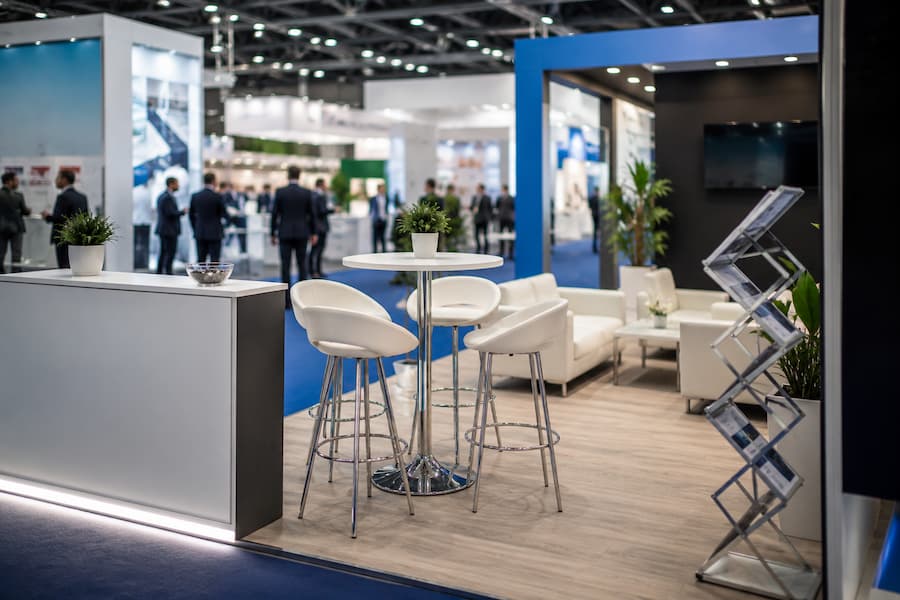
Reception counters create an obvious welcome point, poseur tables encourage informal networking, and lounge furniture provides a quieter setting for detailed consultations or client meetings.
Hiring exhibition furniture also ensures every item arrives in excellent condition without the storage and transportation challenges associated with purchasing your own.
Exhibition Furniture At A Glance
| Furniture | Ideal Use |
|---|---|
| Reception Counter | Welcoming visitors while providing practical storage for literature and personal belongings. |
| Poseur Tables | Creating informal meeting points that encourage short conversations. |
| Bar Stools | Comfortable seating for demonstrations and discussions without occupying excessive floor space. |
| Café Tables and Chairs | Suitable for longer customer meetings away from busy walkways. |
| Lounge Furniture | Providing a relaxed hospitality area for existing clients and prospective customers. |
| Display Cabinets | Presenting products securely while maintaining a professional appearance. |
| Lockable Storage Cupboards | Keeping packaging, refreshments and personal items hidden from view. |
Plan Every Stage Before Arrival
Preparation reduces pressure once build-up begins.
Create a comprehensive checklist covering every stage of the exhibition, from loading vehicles through to dismantling the stand after the event.
Include delivery schedules, furniture arrival times, electrical installations, graphics, product displays, staff rotas and catering arrangements.
Assign responsibilities clearly so every member of your team understands their role before arriving at the venue.
The more organised your preparations become, the more time your team can devote to engaging visitors once the exhibition opens.
Check Equipment Before Leaving
Technical problems can undermine an otherwise professional exhibition stand.
Test all equipment before loading your vehicle, including presentation screens, laptops, tablets, payment terminals and demonstration products.
Bring spare extension leads, charging cables, batteries and adaptors wherever possible. Exhibition venues are busy environments, and sourcing replacement equipment at short notice is rarely straightforward.
A final equipment check before departure can prevent unnecessary disruption on the day of departure.
Prepare Marketing Materials
Although digital marketing continues to grow, printed literature remains an important part of exhibition marketing.
Professionally produced brochures, business cards and product guides provide visitors with something tangible to take away after your conversation.
Review every item before printing.
Check branding, contact details, pricing, QR codes and website addresses to ensure everything remains accurate.
Running out of brochures halfway through an exhibition is avoidable; always order more than you expect to need.
Promote Your Attendance In Advance
Do not wait until the exhibition opens before telling people you will be there.
Build anticipation through your marketing channels during the weeks leading up to the event.
Announce your attendance through email campaigns, LinkedIn updates, social media, newsletters and your website. Invite existing customers to arrange appointments and encourage prospects to visit your stand at specific times.
Generating appointments before the exhibition begins creates guaranteed opportunities from the moment the doors open.
Train Your Exhibition Team
Your stand may look exceptional, but visitors remember the people they meet far more than the furniture surrounding them.
Ensure every member of staff understands your objectives, products and messaging.
They should feel confident in introducing the business, qualifying enquiries, answering technical questions, and consistently recording visitor information.
Avoid allowing staff to gather together in groups or spend time looking at mobile phones while visitors pass by.
Friendly, approachable and knowledgeable staff create a welcoming atmosphere that encourages visitors to engage.
Focus On Meaningful Conversations
The most successful exhibitors spend less time delivering rehearsed sales pitches and more time listening.
Ask thoughtful questions to understand each visitor’s business, challenges and purchasing timescales before discussing solutions.
This approach creates more valuable conversations while helping your team identify genuine opportunities rather than collecting contacts with little commercial potential.
Quality conversations consistently outperform quantity.
Take Advantage Of Networking Opportunities
The exhibition floor is only one part of the event.
Breakfast meetings, evening receptions, seminars and speaker sessions all provide opportunities to meet suppliers, collaborators and prospective customers in a more relaxed setting.
These informal conversations often develop into valuable commercial relationships long after the exhibition has ended.
Allow time in your schedule to participate, rather than spending every minute at your stand.
Observe The Wider Exhibition
Walk around the exhibition whenever staffing allows.
Notice how other exhibitors attract attention, display products and engage visitors.
Pay attention to stand layouts, lighting, hospitality areas and demonstration techniques.
The objective is not to imitate competitors but to gather ideas that could improve your own exhibition strategy in the future.
Every exhibition provides valuable learning opportunities.
Follow Up Promptly
The exhibition may finish at the venue, but the commercial opportunity continues afterwards.
Contact new enquiries while your conversations remain fresh in their minds.
Whether your follow-up includes quotations, product information, meeting invitations, or demonstration bookings, responding promptly demonstrates professionalism and maintains momentum.
Delaying follow-up for several weeks often allows competitors to move ahead.
Measuring Your Return On Investment
Every exhibition should provide insights that improve your next event.
Review the results against the objectives established during the planning stage.
Assess:
- Qualified enquiries generated
- Sales opportunities created
- Orders secured
- Customer meetings arranged
- Website traffic during the campaign
- Social media engagement
- Overall return on investment
These findings help refine future exhibition strategies and justify continued investment.
Exhibition Furniture Hire From BE Event Hire
Creating an inviting exhibition stand starts with event furniture that complements your brand while making visitors feel comfortable. BE Event Hire supplies exhibition furniture throughout the UK for trade shows, exhibitions, conferences, and corporate events of all sizes.
From reception counters and poseur tables to café furniture, lounge seating, display cabinets and exhibition accessories, our extensive hire range helps businesses create professional exhibition spaces that encourage conversation and leave a lasting impression. With nationwide delivery and decades of experience supporting exhibitions across the UK, we help exhibitors present their business with confidence from the moment the doors open.
Related Articles
- Thinking of Exhibiting at a Show This Year?
- Mistakes to Avoid When Planning a Trade Show Exhibit
- Attending Your First Exhibition
- Exhibition Furniture Hire
- Exhibition Stands and Exhibition Panels Hire
Prefer an AI Summary?