Large events rarely operate from a single space. Conferences, exhibitions, festivals, award ceremonies, corporate functions and hospitality events often consist of multiple zones, each serving a different purpose and requiring different furniture.
A conference may include registration desks, keynote presentation spaces, breakout rooms, networking lounges and catering areas. A festival may incorporate public seating areas, VIP hospitality, artist green rooms, crew compounds and production offices. An exhibition may combine seminar theatres, exhibitor stands, meeting areas and refreshment spaces.
The challenge for organisers is ensuring that every zone functions effectively while maintaining a consistent experience throughout the event.
We explain how to plan furniture hire across multiple event zones and highlights the furniture typically required in each area.
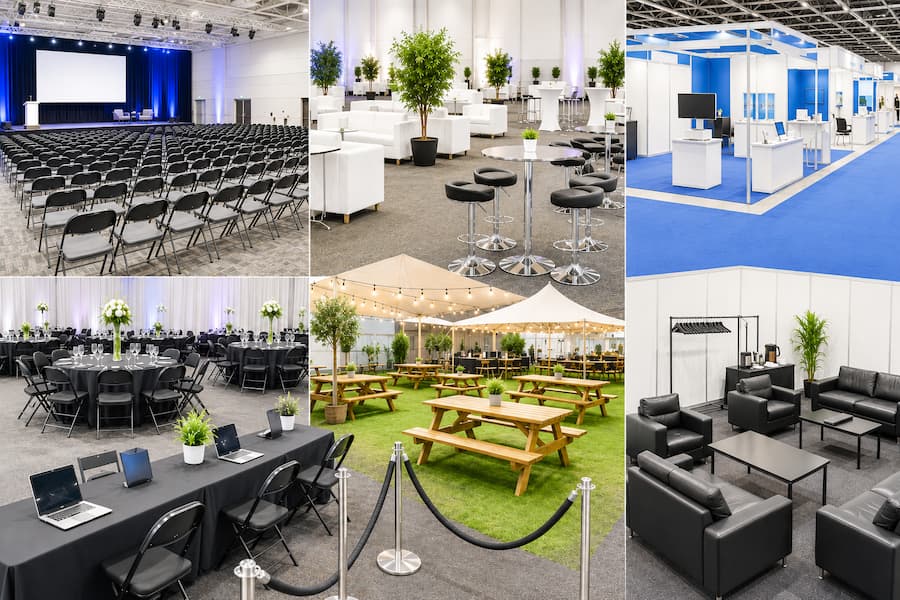
Event Zones
Creating distinct zones helps guests navigate the event and allows each area to perform its intended function.
Benefits include:
- Improved visitor flow
- Better use of available space
- Reduced congestion
- More effective crowd management
- Clear separation of activities
- Enhanced guest experience
Furniture plays a significant role in defining these spaces and influencing how people move through the event.
Planning The Guest Journey
Successful events are rarely experienced as a single space. Guests move through a sequence of areas from arrival to departure, and furniture should support that journey at every stage.
A typical event may include:
- Arrival and registration
- Main presentation or exhibition spaces
- Catering and refreshment areas
- Networking zones
- Hospitality spaces
- Departure areas
When planning furniture hire, it is helpful to consider how guests transition between zones rather than treating each space in isolation.
This approach often highlights opportunities to improve flow, reduce congestion and create a more comfortable experience throughout the event.
Planning Event Zones Early
One of the most common planning mistakes is treating furniture as the final stage of the event build.
Instead, furniture should be considered during the initial layout planning process.
Start by identifying:
- Guest arrival points
- Registration locations
- Main event spaces
- Catering facilities
- Networking areas
- Staff and operational zones
- Emergency routes
Once these areas are established, furniture requirements become much easier to determine.
Typical Event Zones and Furniture Requirements
| Event Zone | Primary Purpose | Typical Furniture |
|---|---|---|
| Registration Area | Guest check in | Trestle tables, chairs, barriers |
| Conference Theatre | Presentations and speakers | Conference chairs, folding chairs |
| Breakout Rooms | Workshops and discussions | Trestle tables, conference chairs |
| Networking Areas | Informal meetings | High tables, stools, lounge furniture |
| Catering Zones | Food and refreshments | Round tables, chairs, picnic benches |
| VIP Areas | Hospitality and relaxation | Soft seating, coffee tables |
| Crew Areas | Staff welfare and operations | Picnic benches, trestle tables |
Registration and Welcome Areas
The registration zone creates the first impression of an event.
Furniture should support efficient guest processing while maintaining clear routes for arrivals.
Trestle table hire is commonly used for registration desks because tables can be configured in straight runs or grouped depending on attendance numbers.
Queue management is equally important. post and rope barriers can help direct attendees and prevent congestion during peak arrival periods.
Registration areas often experience the highest concentration of guests in a short period. Sufficient desk space and queue management are essential to prevent bottlenecks during busy arrival windows.
| Attendance | Recommended Registration Positions |
|---|---|
| Up to 100 guests | 1 to 2 registration desks |
| 100 to 500 guests | 2 to 4 registration desks |
| 500+ guests | Multiple registration stations |
For larger events, organisers may also require waiting areas, information points and additional queue management systems to maintain efficient guest flow.
Conference and Presentation Areas
Presentation spaces often accommodate the largest number of attendees.
The priority is maximising capacity while maintaining comfort and clear sightlines.
For larger audiences, folding chair hire provides an efficient seating solution that can be deployed quickly and positioned in theatre style layouts.
For longer sessions, conference chair hire offers additional comfort and support.
Many conferences use their spaces differently throughout the day. A morning keynote session may require theatre seating, while afternoon sessions may transition into breakout workshops and discussion groups. Choosing flexible furniture helps organisers adapt rooms quickly without disrupting the event schedule.
| Seating Type | Best For | Main Benefit |
|---|---|---|
| Folding Chairs | Large audiences | Fast setup and high capacity |
| Conference Chairs | Long presentations | Improved comfort |
| Banquet Chairs | Awards and dining events | Formal appearance |
Breakout and Workshop Rooms
Breakout rooms require a different approach.
These spaces focus on collaboration, discussion and engagement.
Trestle tables remain one of the most flexible options because they can be configured in classroom, boardroom or U-shaped layouts depending on the session requirements.
Combined with conference chairs, they create practical environments for workshops, training sessions and collaborative discussions.
Networking Areas
Networking spaces are often where the most valuable conversations take place during an event.
Furniture should encourage interaction while allowing guests to move freely between groups.
High table hire is particularly effective because it creates natural meeting points without requiring significant floor space.
Many organisers combine standing tables with smaller seating areas to cater for different preferences. A mixture of high tables, stools and soft seating can help create a balanced environment that supports both short conversations and longer discussions.
Positioning networking furniture near refreshment areas often increases engagement and encourages guests to spend more time in the space.
Dining and Catering Areas
Food and refreshment areas often experience the highest concentration of guests at specific times during the day.
Choosing the right furniture depends on the catering style being provided.
| Dining Style | Recommended Furniture |
|---|---|
| Formal Dining | Round tables and banqueting chairs |
| Buffet Service | Trestle tables and chairs |
| Festival Catering | Picnic benches |
| Standing Reception | High tables |
Round table hire works particularly well for gala dinners, award ceremonies and hospitality events, while picnic bench hire offers a practical solution for outdoor catering areas.
Not every catering area requires seating for every attendee at the same time.
For formal dining events, seating capacity typically matches the number of guests. However, exhibitions, festivals and networking events often operate successfully with seating for approximately 50 to 70 per cent of attendees, allowing guests to move freely throughout the venue.
Understanding these differences can help organisers make better use of available space while avoiding unnecessary furniture costs.
Transition Spaces Between Zones
The areas between event zones are often overlooked during planning.
Corridors, foyers, exhibition aisles and walkways play an important role in helping guests move between different parts of the event.
These spaces may benefit from:
- Information desks
- High tables
- Directional signage
- Post and rope barriers
- Waiting areas
Transition spaces improve wayfinding, reduce congestion and help maintain a smooth flow of people throughout the event.
Furniture should support movement rather than obstruct it, particularly during busy periods such as registration, refreshment breaks and event close.
VIP and Hospitality Spaces
VIP areas require a different atmosphere from public event spaces.
Comfort, presentation and privacy often become higher priorities.
Soft seating creates a more relaxed environment and can include:
- Sofas
- Armchairs
- Coffee tables
- Lounge furniture
For outdoor hospitality areas, rattan furniture hire provides comfortable seating while maintaining a professional appearance.
Many organisers also separate VIP spaces from busier public areas to create a quieter environment and deliver a more premium guest experience.
Green Rooms and Backstage Areas
Performers, speakers and production teams often require dedicated spaces away from public areas.
These zones benefit from practical yet comfortable furniture.
Useful items include:
- Lounge furniture
- Coffee tables
- Coat rails
- Refreshment stations
Coat rail hire can help keep changing and preparation areas organised throughout the event.
Crew and Operational Areas
Operational zones are among the busiest parts of any event.
Furniture needs to be durable, practical and capable of handling constant use.
Requirements include:
- Crew dining areas
- Production offices
- Accreditation centres
- Equipment preparation spaces
- Staff welfare zones
Picnic benches and trestle tables are particularly popular because they provide practical solutions without occupying excessive space.
Providing suitable furniture in crew areas helps support staff welfare and ensures operational teams can work efficiently throughout the event.
Maintaining Consistency Across Zones
Although each zone has different requirements, maintaining consistency throughout the event is important.
Consistency can be achieved through:
- Matching furniture styles
- Coordinated colours
- Similar table finishes
- Uniform seating selections
This creates a more professional appearance and helps the event feel cohesive, even when multiple types of furniture are used.
Managing Delivery and Setup
Multiple event zones often mean multiple delivery requirements.
To simplify setup:
- Deliver furniture by zone
- Label furniture quantities clearly
- Create setup plans for each area
- Keep spare furniture available
- Allow access routes between zones
Good planning reduces setup time and helps avoid confusion during the build phase.
Mistakes To Avoid
Several issues regularly arise when planning furniture across multiple event zones.
- Using the same furniture in every area regardless of purpose
- Underestimating networking space requirements
- Creating bottlenecks between zones
- Forgetting staff and crew areas
- Ordering furniture without a zoning plan
- Failing to maintain consistent presentation
Addressing these issues early helps create a smoother event experience.
Multi Zone Event Planning Checklist
Before confirming your furniture order, work through the following checklist:
- Identify every event zone before selecting furniture
- Estimate attendance for each area
- Consider movement between zones
- Plan registration and catering capacity
- Allocate furniture by zone rather than event-wide totals
- Allow contingency furniture for adjustments
- Maintain a consistent appearance throughout the event
- Review delivery and setup requirements for each space
A structured approach helps ensure every zone performs effectively and contributes to a smooth guest experience.
Furniture Hire From BE Event Hire
BE Event Hire supplies furniture for conferences, exhibitions, festivals, corporate events and hospitality functions throughout the UK.
From registration desks and conference seating to networking furniture, VIP lounges and crew compounds, we can supply the furniture required to support every area of your event.
With substantial stock levels, nationwide delivery and experience supporting events of all sizes, we help organisers create practical, professional environments across multiple event zones.
Related Articles
- Rustic Furniture Or Traditional Hire For Hybrid Events
- Handling Last Minute Guest Increases at Events
- Furniture Hire That Speeds Up Event Setup
- Plan Event Furniture Layouts For Large Events
- Furniture Hire Choices For a Festival Crew Area
Prefer an AI Summary?