Pop up shops give retailers and brands the opportunity to take a product directly to customers without committing to a permanent retail space. They can support product launches, seasonal retail, brand activations, sample sales, new collections, and demand testing in a new location.
The temporary nature of a pop up creates a different furniture challenge. The space still needs to look considered and professional, but everything must work within a short installation period and be removed once the shop closes.
Hiring furniture provides that flexibility. Tables, seating and display furniture can be selected around the space and the products being sold, delivered for the required hire period and collected afterwards.
BE Event Hire supplies event furniture hire throughout the UK, making temporary retail spaces possible without buying, transporting and storing furniture after the pop up has finished.
Planning A Pop Up Space
Before selecting furniture, start with the customer journey through the shop.
A simple pop up may only need a product display and payment point. A larger activation could include several distinct areas.
| Pop Up Zone | Purpose | Furniture Ideas |
|---|---|---|
| Entrance | Introduce the brand and featured products | Display tables and feature furniture |
| Product Display | Present products where customers can browse | Trestle tables and display furniture |
| Customer Interaction | Demonstrations, consultations or sampling | Poseur tables, stools and chairs |
| Seating Area | Provide somewhere to wait, talk or relax | Chairs and lounge furniture |
| Checkout | Payments, packaging and customer service | Trestle table or counter style arrangement |
| Back Of House | Stock, staff belongings and administration | Trestle tables, chairs and clothes rails |
Not every pop up needs every zone. The aim is to give each piece of furniture a clear purpose while leaving enough room for customers to browse comfortably.
Hiring Instead Of Buying
Buying furniture for a shop that may operate for a weekend, a week or a few months creates an obvious question about its future use.
Once the pop up closes, purchased furniture has to be transported, stored, sold, or disposed of.
Hiring removes much of that commitment. It can be particularly useful for brands running:
- One off retail activations
- Seasonal shops
- Product launches
- Sample sales
- Touring brand activations
- Retail trials in new locations
- Temporary shops during refurbishment
Furniture can also be selected for each activation rather than forcing every future pop up to use items purchased for a previous space.
Start With The Products
The products being sold should influence the furniture, not the other way around.
Clothing needs a different presentation space from cosmetics. Homeware may require broad display surfaces, while a drinks promotion may depend more heavily on customer interaction and sampling.
| Retail Format | Useful Furniture |
|---|---|
| Fashion | Display tables, clothes rails, seating and mirrors |
| Beauty | Display tables, consultation chairs and poseur tables |
| Homeware | Trestle tables and feature display furniture |
| Food Sampling | Trestle tables, poseur tables and catering equipment |
| Technology | Demonstration tables, stools and customer seating |
| Brand Activation | Poseur tables, lounge furniture and feature pieces |
Consider product dimensions, the number of items displayed, and whether customers need to handle or test them.
Trestle Tables For Displays
Trestle tables remain one of the most useful pieces of temporary retail furniture because the same basic table can perform several jobs.
BE Event Hire supplies a substantial range of trestle tables for hire, including traditional and rustic options.
Within a pop up, trestle tables can be used for:
- Product displays
- Checkout areas
- Demonstrations
- Sampling stations
- Gift wrapping
- Stock preparation
- Back of house workstations
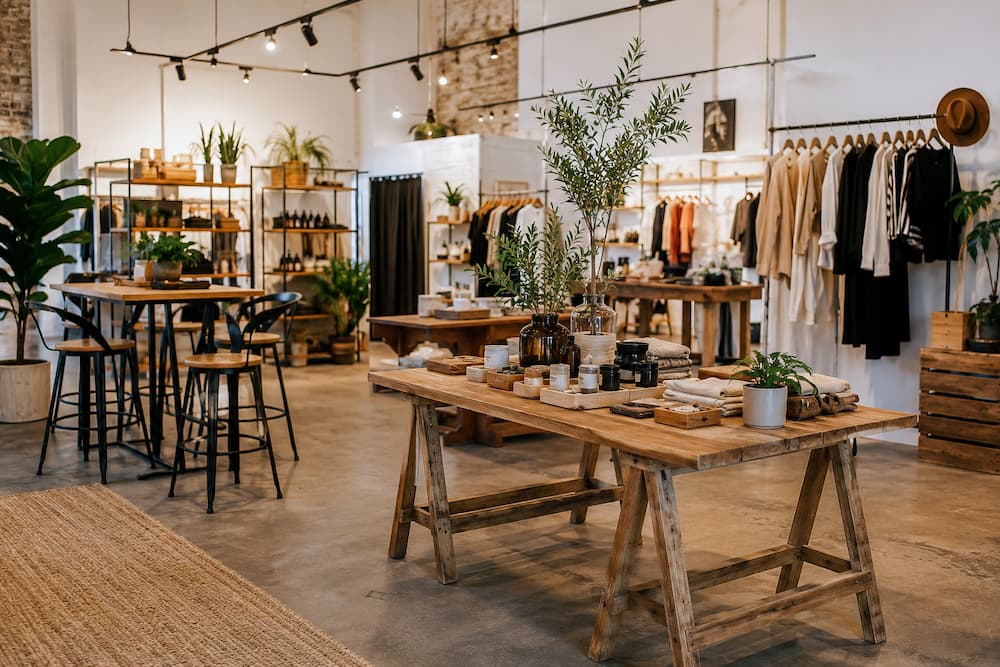
Rustic trestle tables are particularly useful where the surface itself contributes to the design. Their natural appearance means they can often be used without linen, providing a straightforward display platform for fashion, food, craft, homeware and lifestyle products.
Traditional trestle tables can be dressed or covered where a different finish is required.
Building Displays At Different Heights
A room filled with products displayed at one height can quickly look flat.
Combining different furniture heights creates a more varied retail environment and can help draw attention to featured products.
Lower tables can hold larger collections, while high tables can be used for hero products, demonstrations or customer interaction.
This does not mean filling every available area with furniture. Open floor space is valuable in a temporary shop, particularly around entrances and popular displays.
High Tables For Customer Interaction
Not every pop up is primarily about displaying stock.
Technology launches, drinks promotions, beauty demonstrations and brand activations may rely on conversations between staff and customers.
In these situations, high table hire can provide useful interaction points without creating a formal seated environment.
Poseur tables work particularly well for:
- Product demonstrations
- Sampling
- Customer consultations
- Competitions and sign ups
- Informal meetings
- Drinks and refreshments
They also occupy relatively little floor space compared with conventional tables surrounded by chairs.
Seating With A Purpose
A pop-up doesn’t necessarily need many chairs, but strategically placed seating can improve the space.
Customers may need somewhere to sit while trying products, waiting for a companion, completing paperwork or speaking with a member of staff.
The chair hire range lets you choose seating to match the style and practical needs of the activation.
For a product demonstration, a few stools or chairs may be sufficient. A premium brand activation may benefit from a dedicated lounge area, while a high-footfall sample sale may require little customer seating because maintaining circulation is more important.
Clothing And Fashion Pop Ups
Fashion pop ups have additional requirements because products need to be presented, stored, and replenished throughout the day.
Clothes rails can provide temporary hanging space for collections while tables can display folded garments, accessories and footwear.
Back of house storage is equally important. Stock should be accessible to staff without boxes and packaging spilling into customer areas.
A practical fashion pop up might combine:
- Clothes rails for hanging garments
- Rustic or traditional trestle tables for folded products
- Feature chairs or lounge seating
- A checkout table
- Back of house tables for stock organisation
The furniture does not need to replicate permanent shop fittings. It needs to create an attractive temporary environment that is easy to install and operate.
Checkout And Packing Areas
The checkout is often overlooked because attention naturally goes towards the customer-facing displays.
However, a poorly planned payment area can create queues and clutter.
Allow enough surface space for:
- Payment equipment
- Shopping bags
- Packaging
- Receipts
- Customer purchases
- Staff equipment
For busy shops, separating payment and packing can help keep the queue moving.
A trestle table can provide a straightforward temporary checkout, while additional tables behind the main customer area can support packing and stock preparation.
Customer Flow
Furniture affects the route customers take through a pop up.
Placing too many tables close to the entrance can create an immediate bottleneck. Narrow gaps between displays make browsing uncomfortable and become particularly problematic during busy periods.
Instead, identify the main circulation route before positioning furniture.
Keep:
- The entrance clear
- Main browsing routes open
- Queues away from product displays
- Checkout areas accessible
- Emergency exits unobstructed
- Stock replenishment routes separate where possible
Furniture should help guide customers through the space without making the route feel artificially controlled.
Furniture For Small Pop Ups
Small retail spaces require discipline.
Adding more furniture doesn’t automatically create more display capacity because customers still need enough room to enter, turn, browse, and interact with products.
For a compact pop up, a simple combination might include:
| Requirement | Furniture |
|---|---|
| Main Product Display | One or two trestle tables |
| Featured Product | Poseur table or small display table |
| Checkout | Trestle table |
| Customer Seating | Two to four chairs if required |
| Back Of House | Small preparation table or clothes rail |
Start with the furniture you need to run the shop successfully, then add decorative pieces if the available floor area allows.
Furniture For Larger Brand Activations
Larger pop ups often combine retail with an experience.
Customers might browse products, watch demonstrations, meet brand representatives, take part in an activity and then move into a hospitality area.
Furniture can help define each zone without constructing permanent partitions.
A large activation could use:
- Trestle tables for product displays
- Poseur tables for demonstrations
- Chairs for consultations
- Soft seating for hospitality
- Tables for refreshments
- Queue barriers at busy entrances
This zoning approach is particularly useful in open plan spaces where the furniture itself helps communicate the purpose of each area.
Back Of House Furniture
The customer-facing shop receives most of the design attention, but staff also need somewhere to work.
Depending on the activation, back of house areas may require:
- Stock sorting tables
- Staff chairs
- Clothes rails
- Refreshment facilities
- Storage surfaces
- Administrative workstations
Using practical hire furniture behind the scenes can help keep the retail floor organised and prevent stock preparation from taking place in front of customers.
Short Setup Windows
Pop-ups often operate in spaces with limited access before opening.
A shop opening on Saturday morning might only become available on Friday evening. Shopping centres and city centre retail units may also impose strict delivery periods.
Furniture that can be transported and positioned efficiently is therefore particularly useful.
Folding trestle tables, stackable chairs, and mobile display items can reduce the time required to transform an empty unit into a functioning retail space.
Before delivery, confirm:
- Loading access
- Delivery restrictions
- Opening hours
- Service lifts
- Parking arrangements
- Distance from unloading to the unit
- Collection access after closing
These details are especially important for shopping centres where public entrances may not be available for commercial deliveries.
Pop Ups Across Several Locations
Some campaigns move between cities rather than remaining in one shop.
Furniture hire can support this model because similar furniture can be specified for each activation without the brand having to own and transport an entire retail fit-out.
Maintaining the same core furniture style can also help create a consistent appearance across a touring campaign.
For brands moving between venues, it is worth identifying which elements genuinely need to travel with the activation and which can be hired closer to each event.
Temporary Does Not Mean Unfinished
A pop-up may exist for only a few days, but customers still judge the environment the moment they enter.
Temporary furniture should therefore be selected with the same attention to layout and presentation as the products themselves.
The strongest spaces usually avoid imitating permanent retail interiors. Instead, they make temporary furniture part of the concept.
Rustic tables can become prominent display surfaces. Poseur tables can create demonstration points. Carefully selected chairs can introduce colour or character. Simple furniture can provide a neutral backdrop so the product stays the focus.
Pop Up Furniture Planning Checklist
Before confirming the furniture order, check:
- The dimensions of the retail space
- The customer route through the shop
- Product display requirements
- Checkout and packing space
- Customer interaction areas
- Seating requirements
- Back of house furniture
- Delivery and collection access
- Available setup time
- Furniture quantities
It is also worth sketching the proposed layout before ordering. Even a simple floor plan can reveal overcrowded areas or unused space.
Pop Up Shop Furniture Hire From BE Event Hire
BE Event Hire supplies temporary furniture for pop up shops, product launches, retail activations, exhibitions and promotional events throughout the UK.
Our extensive stock includes trestle tables, high tables, chairs and furniture suitable for customer facing and back of house areas.
Hiring gives brands the flexibility to create a temporary retail environment around each campaign’s requirements, without being left with furniture to store once the shop closes.
With nationwide delivery and collection, BE Event Hire can supply everything from a small selection of display tables and chairs to the furniture needed for a substantial retail activation.

Related Articles
- Challenges in Event Planning
- Festival Furniture Hire
- Rustic Furniture Or Traditional Hire For Hybrid Events
- Pop Up Events Guide
- Business Workshop Events – Tips & Ideas
Prefer an AI Summary?